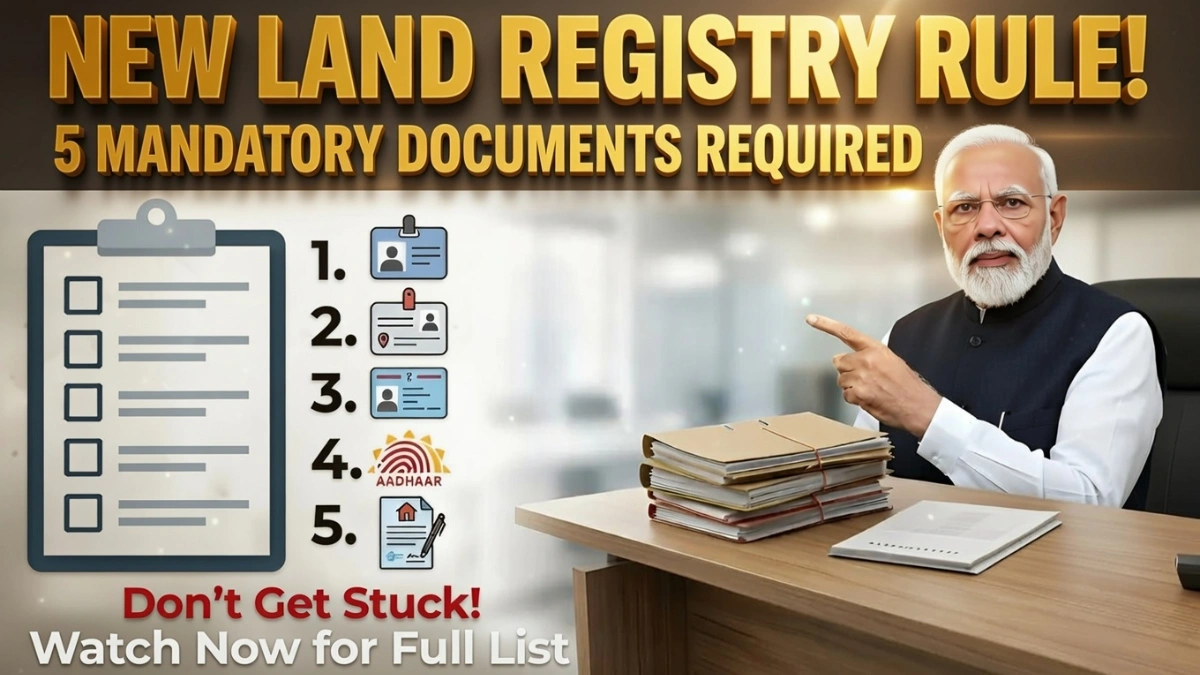
Property Registration Rule Changed– In 2026, new rules for property and land registration have been introduced to improve transparency and reduce fraud. Buyers and sellers must now present specific mandatory documents before registration can proceed. These changes aim to make property transactions safer and legally secure. Anyone planning to register land or property must be aware of these requirements.
Why the Rules Have Been Updated
The updated rules address issues such as fake ownership claims, incomplete records, and disputed properties. Authorities are focusing on stronger verification to protect both buyers and sellers. Proper documentation ensures clear ownership history and reduces legal complications. This move strengthens trust in real estate transactions.
The 5 Key Documents Required for Registration
Applicants must carry identity proof, property ownership proof, sale deed, tax receipts, and encumbrance certificate. These documents verify the identity of parties and the legal status of the property. Missing any of these may result in rejection or delay of registration. Proper preparation before visiting the registrar’s office is essential.
Property Registration 2026 Overview
| Document | Purpose |
|---|---|
| Identity Proof (Aadhaar/Voter ID/PAN) | Verifies buyer and seller identity |
| Sale Deed | Legal proof of property transaction |
| Ownership Proof | Confirms current ownership status |
| Property Tax Receipts | Confirms no pending dues |
| Encumbrance Certificate | Ensures property is free from legal disputes |
This table summarizes the mandatory documents required under the 2026 property registration rules.
Impact on Buyers and Sellers
Buyers must ensure all documents are verified before finalizing a deal. Sellers must maintain updated property records and tax payments. These rules reduce the chances of fraudulent sales and disputed ownership claims. Both parties benefit from a safer and more transparent process.
What Happens If Documents Are Missing
If any of the required documents are missing, the registrar may refuse to process the registration. Applicants may be asked to return with complete paperwork, causing delays. In some cases, incomplete records can lead to legal scrutiny. Preparing documents in advance avoids inconvenience.
Tips for Smooth Property Registration
Verify all documents with legal experts before visiting the registrar office. Keep original copies along with photocopies for submission. Ensure that names and details match across all documents. Proper planning can make the registration process quick and hassle-free.
Conclusion
The 2026 property registration rules emphasize transparency, legal clarity, and fraud prevention. Carrying the five mandatory documents is now essential for successful land or property registration. Buyers and sellers should stay informed and prepare in advance to avoid delays and legal issues.
Disclaimer: This article is for informational purposes only. Property registration rules and document requirements may vary by state and official notifications. Individuals should verify details with local registration authorities before proceeding.